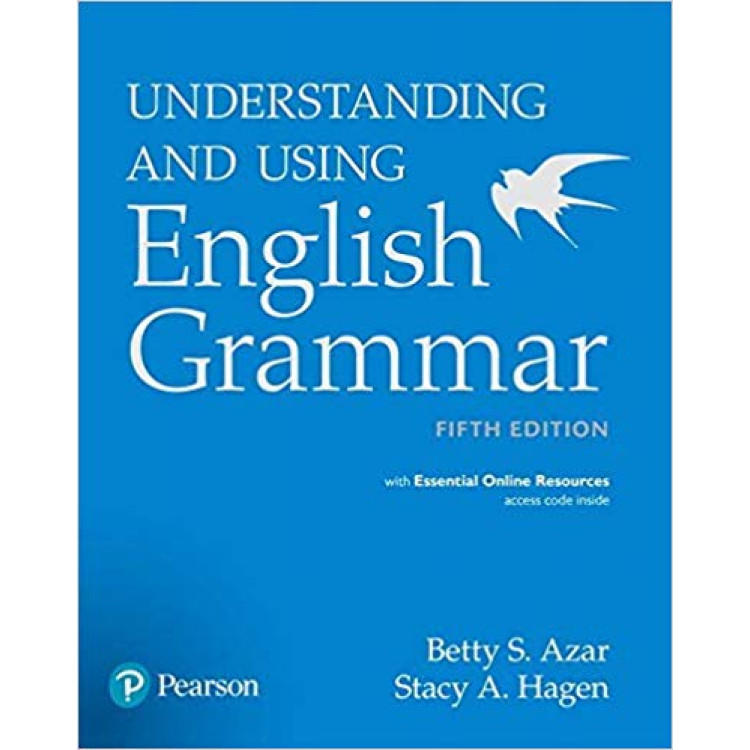
Understanding and Using English Grammar Fifth Edition
Сумата се прибавя директно в кошницата
16.32 €
Preface to the Fifth Edition xi
Acknowledgments xiii
Chapter 1 PRESENT AND PAST; SIMPLE AND PROGRESSIVE 1
1-1 Simple Present and Present Progressive 2
1-2 Simple Present and Present Progressive: Affiirmative, Negative,
Question Forms 5
1-3 Verbs Not Usually Used in the Progressive (Stative Verbs) 7
1-4 Simple Past Tense 12
1-5 Simple Past vs.Past Progressive 16
1- 6 Unfulfilled Intentions: Was I Were Going To 21
Chapter 2 PERFECT AND PERFECT PROGRESSIVE TENSES 25
2- 1 Regular and Irregular Verbs 26
2-2 Irregular Verb List 26
2-3 Present Perfect: Since and For 29
2-4 Present Perfect: Unspecified Time and Repeated Events 31
2-5 Have and Has in Spoken English 35
2-6 Present Perfect vs. Simple Past 36
2-7 Present Perfect Progressive 40
2-8 Past Perfect 44
2-9 Had in Spoken English 46
2- 10 Past Perfect Progressive 47
Chapter 3 FUTURE TIME 53
3- 1 Simple Future: Forms of Will and Be Going To 54
3-2 Will vs. Be Going To 56
3-3 Expressing the Future in Time Clauses 60
3-4 Using the Present Progressive and the Simple Present to
Express Future Time 62
3-5 Future Progressive 63
3-6 Future Perfect and Future Perfect Progressive 65
Chapter 4 REVIEW OF VERB TENSES 70
Chapter 5 SUBJECT-VERB AGREEMENT 78
5-1 Final -s/-es: Use and Spelling 79
5-2 Basic Subject-Verb Agreement 80
5-3 Collective Nouns 82
5-4 Subject-Verb Agreement: Using Expressions of Quantity 84
5-5 Subject-Verb Agreement: Using There + Be 86
5- 6 Subject-Verb Agreement: Some Irregularities 88
Chapter 6 NOUNS 94
6- 1 Regular and Irregular Plural Nouns 95
6-2 Nouns as Adjectives 98
6-3 Possessive Nouns 101
6-4 More About Expressing Possession 103
6-5 Count and Noncount Nouns 105
6-6 Noncount Nouns 107
6-7 Some Common Noncount Nouns 107
6-8 Expressions of Quantity Used with Count and Noncount Nouns 110
6-9 Using A Few and Few; A Little and Little 113
6-10 Singular Expressions of Quantity: One, Each, Every 115
6- 11 Using Of in Expressions of Quantity 117
Chapter 7 ARTICLES 122
7- 1 Articles (A,An, The) with Indefinite and Definite Nouns 123
7-2 Articles: Generic Nouns 125
7-3 Descriptive Information with Definite and Indefinite Nouns 128
7-4 General Guidelines for Article Usage 130
7- 5 Using The or 0 with Titles and Geographic Names 134
Chapter 8 PRONOUNS 139
8- 1 Pronouns and Possessive Adjectives 140
8-2 Agreement with Generic Nouns and Indefinite Pronouns 145
8-3 Personal Pronouns: Agreement with Collective Nouns 146
8-4 Reflexive Pronouns 147
8-5 Using You, One, and They as Impersonal Pronouns 151
8-6 Forms of Other 153
8- 7 Common Expressions with Other 157
Chapter 9 MODALS, PART 1 161
9- 1 Basic Modal Introduction 162
9-2 Expressing Necessity: Must, Have To, Have Got To 163
9-3 Lack of Necessity (Not Have To) and Prohibition (Must Not) 165
9-4 Advisability/Suggestions: Should, Ought To, Had Better, Could 167
9-5 Expectation: Be Supposed To/Should 171
9-6 Ability: Can, Know How To, and Be Able To 173
9-7 Possibility: Can, May, Might 175
9-8 Requests and Responses with Modals 176
9-9 Polite Requests with WouldYou Mind 177
9- 10 Making Suggestions: Let's, W'hy Don’t, Shall I I We 180
Chapter 10 MODALS, PART 2 184
10- 1 Using Would to Express a Repeated Action in the Past 185
10-2 Expressing the Past: Necessity, Advisability, Expectation 187
10-3 Expressing Past Ability 191
10-4 Degrees of Certainty: Present Time 192
10-5 Degrees of Certainty: Present Time Negative 194
10-6 Degrees of Certainty: Past Time 196
10-7 Degrees of Certainty: Future Time 199
10-8 Progressive Forms of Modals 201
10-9 Combining Modals with Phrasal Modals 205
10-10 Expressing Preference: Would Rather 207
10- 11 Summary Chart of Modals and Similar Expressions 208
Chapter 11 THE PASSIVE 215
11- 1 Active vs. Passive 216
11-2 Tense Forms of the Passive 217
11-3 Using the Passive 219
11-4 The Passive Form of Modals and Phrasal Modals 225
11-5 Stative (Non-Progressive) Passive 231
11-6 Common Stative (Non-Progressive) Passive Verbs + Prepositions 234
11-7 The Passive with Get 238
11- 8 -edl-ing Adjectives 241
Chapter 12 NOUN CLAUSES 247
12- 1 Introduction 248
12-2 Noun Clauses with Question Words 249
12-3 Noun Clauses with 'Whether or If 253
12-4 Question Words Followed by Infinitives 256
12-5 Noun Clauses with That 257
12-6 Quoted Speech 260
12-7 Reported Speech 262
12-8 Reported Speech: Modal Verbs in Noun Clauses 264
12- 9 The Subjunctive in Noun Clauses 267
Chapter 13 ADJECTIVE CLAUSES 272
13- 1 Adjective Clause Pronouns Used as the Subject 273
13-2 Adjective Clause Pronouns Used as the Object of a Verb 276
13-3 Adjective Clause Pronouns Used as the Object of a Preposition 278
13-4 Using 'Whose 280
13-5 Using WnWnere in Adjective Clauses 282
13-6 Using 'Wh.en in Adjective Clauses 284
13-7 Using Adjective Clauses to Modify Pronouns 287
13-8 Punctuating Adjective Clauses 288
13-9 Using Expressions of Quantity in Adjective Clauses 292
13-10 Using ^bich to Modify a Whole Sentence 293
13- 11 Reducing Adjective Clauses to Adjective Phrases 295
Chapter 14 GERUNDS AND INFINITIVES, PART 1 302
14- 1 Gerunds and Infinitives: Introduction 303
14-2 Common Verbs Followed by Gerunds 304
14-3 Common Verbs Followed by Infinitives 306
14-4 Infinitives with Objects 308
14-5 CommonVerbs Followed by Either Infinitives or Gerunds 311
14-6 Using Gerunds as the Objects of Prepositions 316
14-7 Go+ Gerund 321
14-8 Special Expressions Followed by -ing 323
14-9 It + Infinitive; Gerunds and Infinitives as Subjects 325
14-10 Reference List ofVerbs Followed by Infinitives 327
14-11 Reference List of Verbs Followed by Gerunds 328
14- 12 Reference List of Preposition Combinations Followed by Gerunds 329
Chapter 15 GERUNDS AND INFINITIVES, PART 2 334
15- 1 Infinitive of Purpose: In Order To 335
15-2 Adjectives Followed by Infinitives 337
15-3 Using Infinitives with Too and Enough 339
15-4 Passive Infinitives and Gerunds: Present 340
15-5 Past Forms of Infinitives and Gerunds: Active and Passive 343
15-6 Using Gerunds or Passive Infinitives Following Need 345
15-7 UsingVerbs of Perception 347
15-8 Using the Simple Form After Let and Help 348
15-9 Using CausativeVerbs: Make, Have, Get 349
15- 10 Using a Possessive to Modify a Gerund 352
Chapter 16 COORDINATING CONJUNCTIONS 357
16- 1 Parallel Structure 358
16-2 Parallel Structure: Using Commas 359
16-3 Punctuation for Independent Clauses; Connecting
Them with And and But 362
16- 4 Paired Conjunctions: Both ...And; Not Only ...But Also;
Either... Or;Neither... Nor 364
Chapter 17 ADVERB CLAUSES 370
17- 1 Introduction 371
17-2 Using Adverb Clauses to Show Time Relationships 373
17-3 Using Adverb Clauses to Show Cause and Effect 378
17-4 Expressing Contrast (Unexpected Result): Using Even Though 379
17-5 Showing Direct Contrast: 381
17-6 Expressing Conditions in Adverb Clauses: //-Clauses 382
17-7 Shortened //-Clauses 383
17-8 Adverb Clauses of Condition: Using ^Whether Or Not and Even If 384
17-9 Adverb Clauses of Condition: Using In Case 386
17-10 Adverb Clauses of Condition: Using Unless 387
17- 11 Adverb Clauses of Condition: Using Only If 388
Chapter 18 REDUCTION OF ADVERB CLAUSES TO MODIFYING
ADVERBIAL PHRASES 392
18- 1 Introduction 393
18-2 Changing Time Clauses to Modifying Adverbial Phrases 394
18-3 Expressing the Idea of “During the Same Time” in
Modifying Adverbial Phrases 395
18-4 Expressing Cause and Effect in Modifying Adverbial Phrases 395
18-5 Using Upon + -ing in Modifying Adverbial Phrases 399